How Often You Really Need to Repaint Your House Exterior in Minnesota (Hint: Not the Whole House at Once)
Why the repaint clock runs faster on two walls than the other two
Webster's Quality Painting repaints Minnesota house exteriors on a 3 to 5 year cycle for wood siding and 10 to 15 years for fiber cement, but up here the honest answer is by wall, not by house: south and west faces fade and chalk years before the shaded sides. We've painted Twin Cities exteriors out of Prior Lake since 2000, fully insured, every exterior backed by a 2 to 3 year warranty. Call (612)-987-1566.
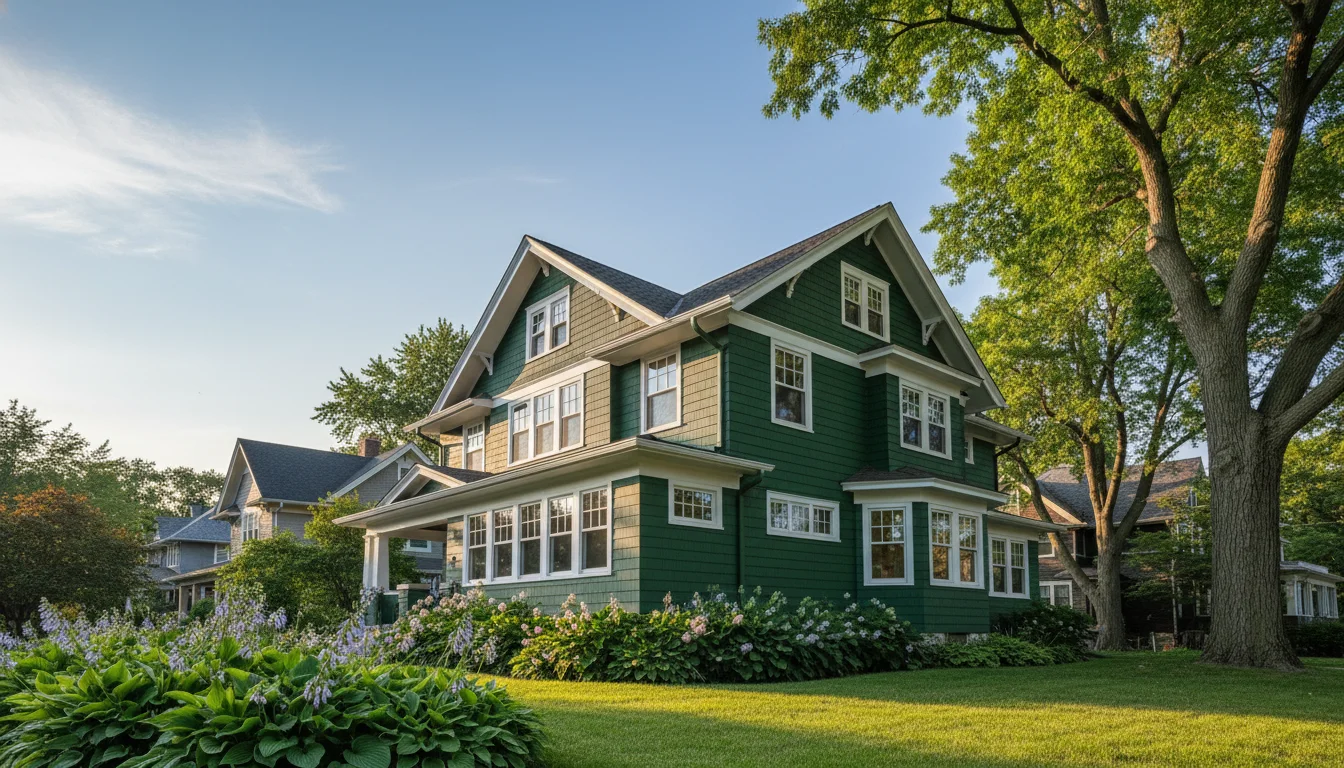
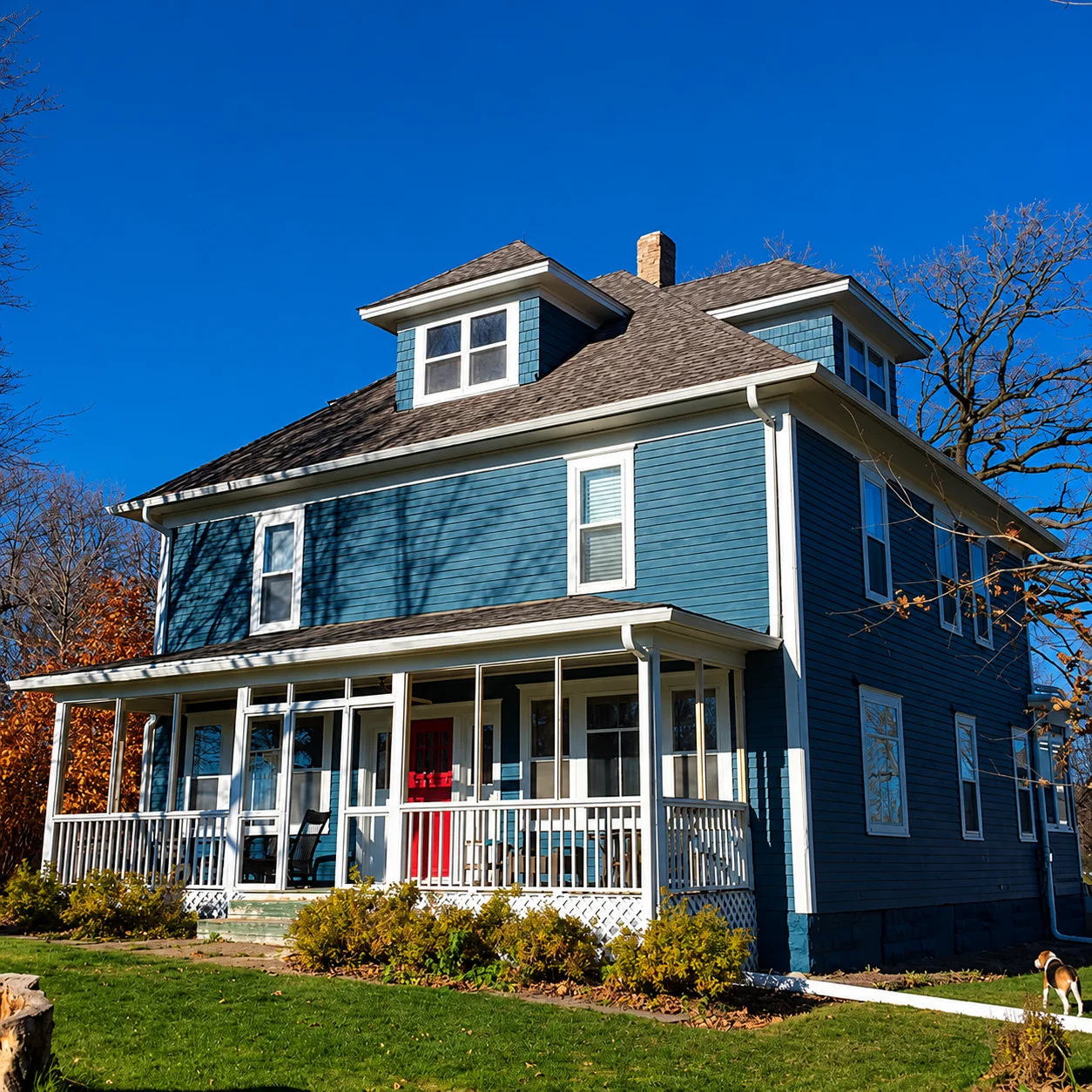
The reason the usual number fails here is Minnesota freeze-thaw plus sun exposure, and the two don't hit every wall equally. A south- or west-facing wall catches direct afternoon sun for hours, bakes the coating, then rides the same freeze-thaw cycling the rest of the house does once the sun drops. The north wall barely sees UV. That's why we almost never recommend repainting all four sides on the same schedule, and why a homeowner who repaints the whole envelope the moment one wall looks tired is often paying to recoat two walls that had years left in them.
How often should you repaint your house exterior?
The general range is 5 to 10 years, but that spread is useless without knowing your siding, because the siding is what actually sets the interval. In Minnesota you also knock the optimistic end of any range down a notch, since freeze-thaw cycling and hard UV on the sunny walls age a coat faster than the national averages assume. Here's what each common siding type actually gets you up here, and these are the numbers we quote against, not a sales chart.
- Wood siding and trim: roughly 3 to 5 years. Wood moves the most with Minnesota's humidity swings and holds the least film, so it's the shortest interval of the bunch. Trim and fascia, which catch roof runoff, usually go first.
- Fiber cement (HardiePlank and similar): roughly 10 to 15 years. It's dimensionally stable and holds paint beautifully, which is why it's the longest-lasting surface we repaint. Factory-finished boards can push the long end of that.
- Stucco: roughly 5 to 10 years, sometimes longer with elastomeric coatings. The variable is cracking. Stucco shows hairline cracks that let water in, and in freeze-thaw those cracks widen, so stucco gets judged on its cracks as much as its color.
- Aluminum siding: roughly 5 years before it chalks noticeably. Aluminum doesn't rot, but the old factory finish oxidizes to a chalky film that has to be washed off before anything new bonds.
- Previously painted brick: 15 to 20 years, but think hard before you start that clock. Painting brick is close to permanent, and once it's painted it needs repainting forever.
Not sure which bucket your house falls in, or whether only one wall is actually due? Call Mike at (612)-987-1566 and we'll read it with you before you spend a dollar.
How long does exterior paint last in Minnesota specifically?
Shorter than the brochure says, and the reason is specific to this climate: a Minnesota winter runs dozens of freeze-thaw cycles, and each one works moisture into and out of any coat that didn't bond perfectly. That cycling, not the cold itself, is what shortens real-world paint life here versus a milder state. On top of it, the south and west walls take direct afternoon UV that the north wall never sees, so one house can genuinely be on two different repaint clocks at the same time.
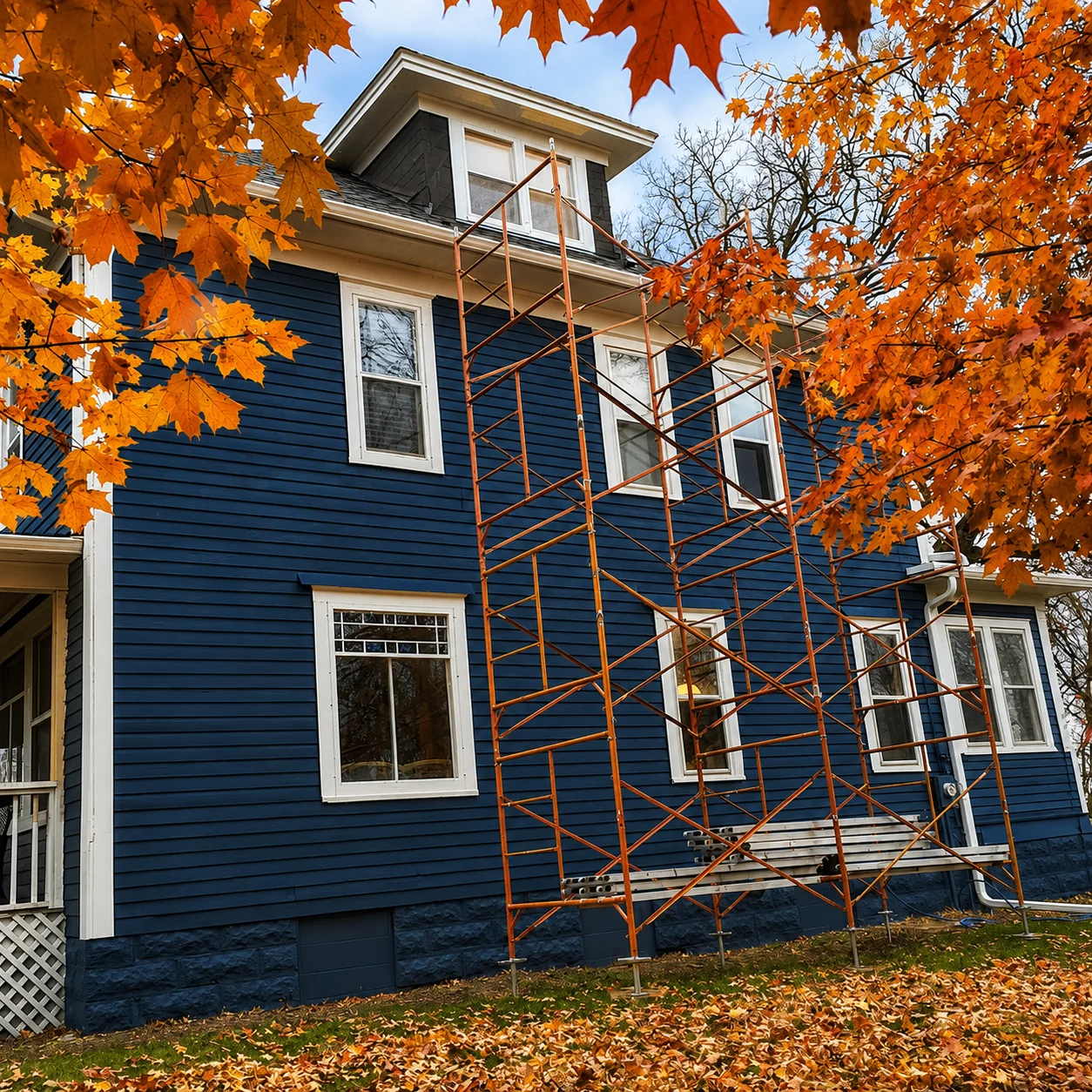
"We'll pull up to a house in Prior Lake or Lakeville where the south wall is chalking and fading and the north wall still looks two years old. Same paint, same day, same crew that did it. The sun and the snow just didn't split the work evenly."
There's a second Minnesota-specific factor most guides skip: when the coat went on. A full exterior done in the tight warm-season window, roughly late May through September, cures fully before winter and earns its full lifespan. A coat rushed on in a mild October over cold nights never cured right, and it starts failing in its first spring no matter what the siding is. So "how long does exterior paint last" has two answers up here: how long the siding type allows, minus whatever a bad application window already stole. If you want the detail on that window, we break it down in our guide to the best time to paint a Minnesota exterior.
Signs your house needs repainting (before the chart says you're due)
Don't repaint on a calendar. Repaint on what the walls are actually doing, and the walls tell you plainly if you know where to look. Here are the signals we check on every exterior walkthrough, roughly in the order they show up:
- Fading on the south and west walls. The sunniest walls lose color first. If the south face looks noticeably washed-out next to the north face, the coating is breaking down even if nothing's peeling yet.
- Chalking. Run your hand down the siding. If it comes away with a powdery film, the binder has degraded and the surface won't hold a new coat without a wash first.
- Caulk failure at the joints. Cracked or pulled-away caulk around windows, doors, and trim seams is often the first real warning, because that's where water gets behind the siding and the freeze-thaw damage starts.
- Peeling or flaking, especially at seams and after winter. If a coat peels at the board seams or around trim the first spring after a repaint, that's an adhesion failure from a coat that cured cold, not normal wear.
- Exposed or graying bare wood. Once you can see raw wood, the paint is no longer protecting it, and every week it stays bare the prep gets more expensive.
- Hairline cracks in stucco. Small now, bigger after one winter. On stucco, cracks are the clock.
If you've got a couple of these and you're not sure whether it's a spot fix or a full side, tell us what you're seeing and we'll come back with a straight read.
When prep or repair comes before paint, not a fresh coat
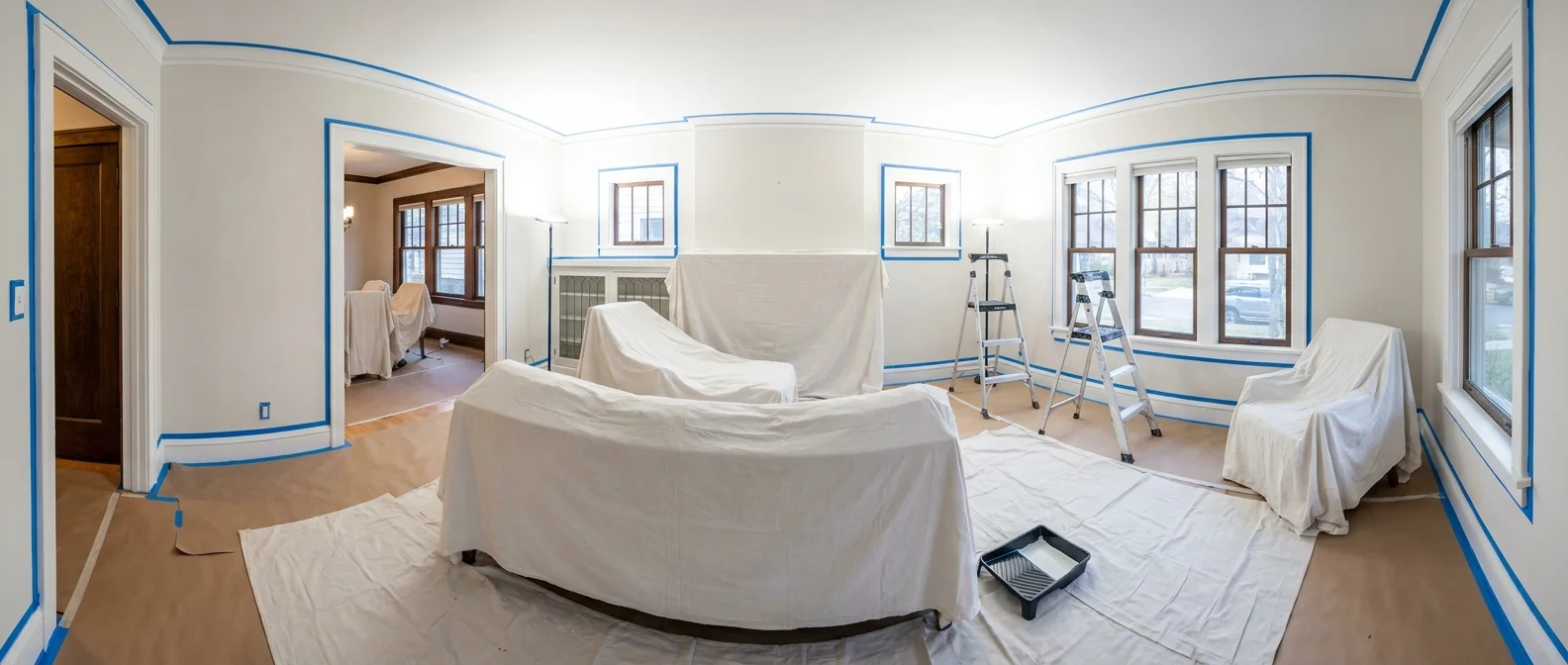
Here's the part a lot of repaint quotes gloss over: on an exterior that's showing age, the paint is sometimes the last step, not the first. A fresh coat over chalk, over peeling, or over bare rotted wood just fails again on the same schedule the old coat was already on. So before we talk color, we figure out what the surface actually needs.
What we're checking for before any paint goes on:
- Chalk and dirt that have to wash off so the new coat can bond.
- Failed caulk at trim seams, which gets cut out and replaced so water stays out through the next winter.
- Soft or rotted wood on trim, fascia, and sills, which gets repaired or replaced, because paint is a finish, not a structural fix.
- Spot-priming on the bare and failed areas so the whole wall ages at one rate instead of flashing through.
The honest version of how often you repaint, then, is this: you repaint the walls that are actually failing, after the prep that lets the new coat hold, timed for the warm-season window so it cures before winter. That discipline is the only reason we can stand behind exterior work with a 2-3 year warranty. For the full picture of how we approach the whole envelope, see our exterior house painting hub, or the residential exterior repaint detail if you're weighing siding-specific questions like whether vinyl can be painted. Free estimate, no pressure: (612)-987-1566.
When you don't need to repaint yet (the part most contractors won't say)
We'd rather tell you to wait a year than sell you a coat you didn't need, so here's the honest gate. If your exterior isn't chalking, your caulk is intact, nothing's peeling, and the south wall hasn't faded noticeably against the north wall, you're probably not due, no matter what a repaint-interval chart told you. A coat that's holding is doing its job, and recoating a sound wall early is money you don't get back.
There's also the trap of repainting over a problem instead of fixing it. If the real issue is failed caulk letting water in, or a patch of rot behind the trim, a fresh coat hides it for a season and then it comes right back through. Spot-repair and spot-prime the failing areas and hold the full repaint for when the siding type's interval is genuinely up. That's usually the smarter spend, and it's the call we make on a lot of Prior Lake and Lakeville homes where one side is weathered and the rest has life left. We serve the Twin Cities metro from Prior Lake, fully insured, in business since 2000. No emergency service, no after-hours claims, just exterior work timed and prepped to actually hold. Get a free estimate or call (612)-987-1566.