
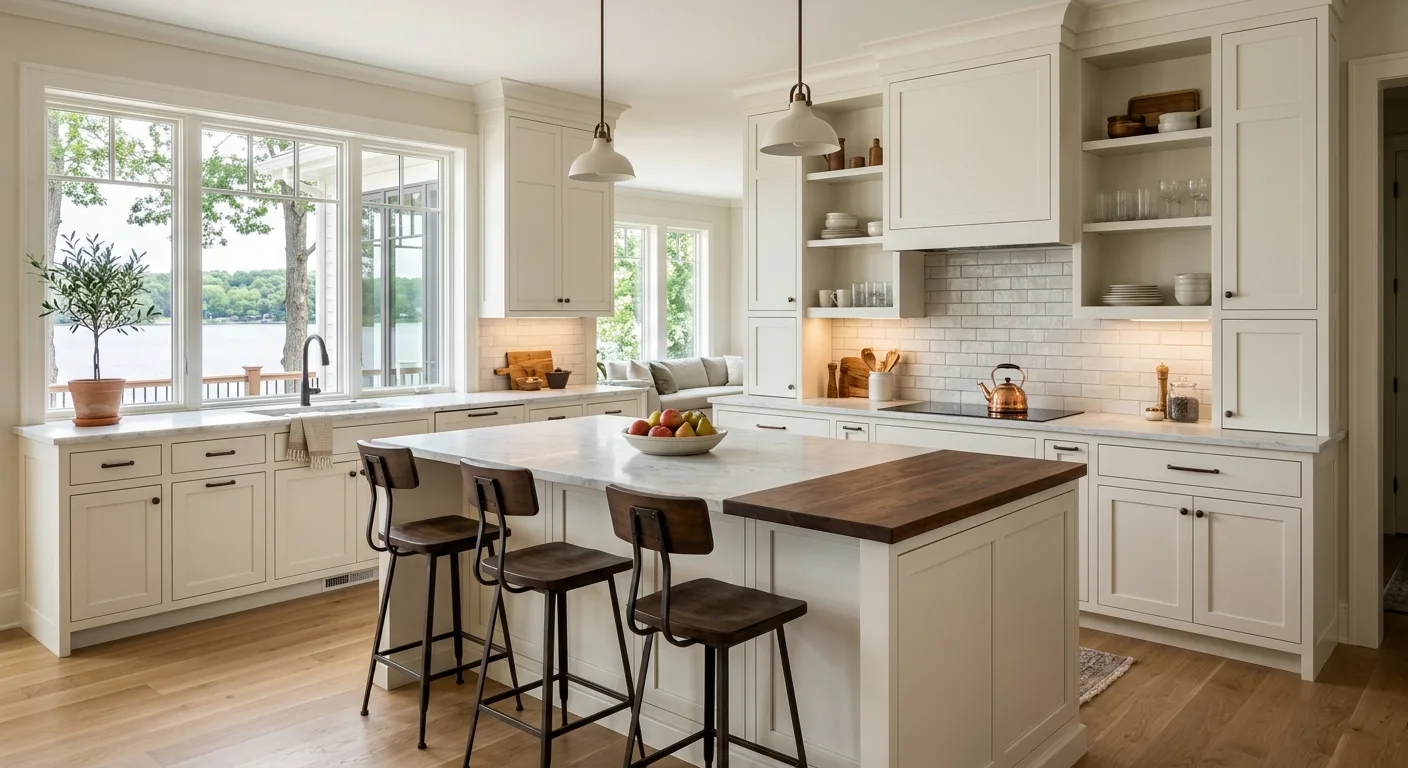
Cabinet Refinishing That Restores What You Already Have
Why homeowners choose Webster's Quality Painting
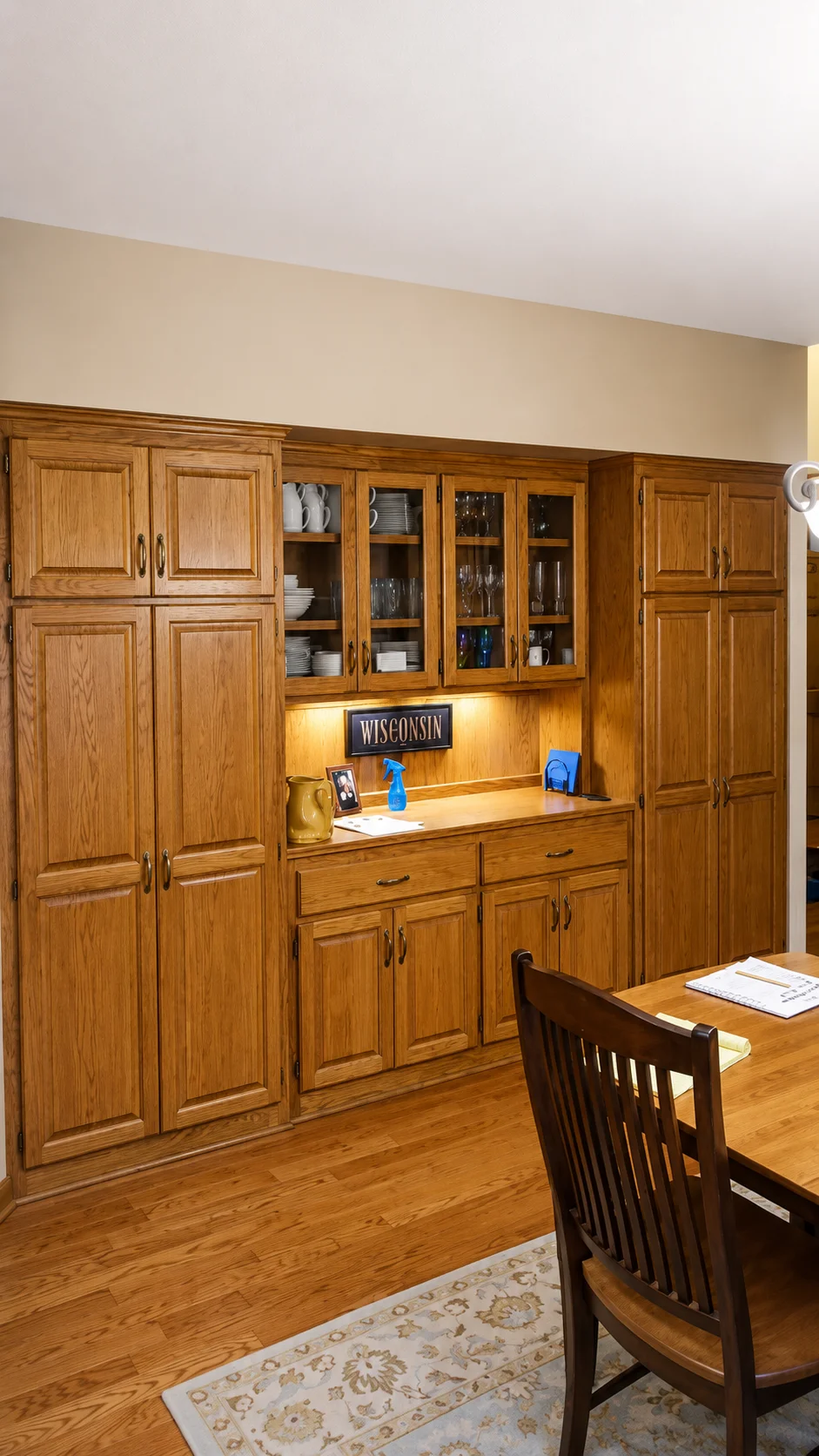
Webster's Quality Painting refinishes kitchen cabinets across the Twin Cities, restoring the cabinets you already own instead of replacing them. On solid boxes, refinishing strips or deglosses the worn factory coat, repairs the dings, and rebuilds a hard, sprayed enamel finish over previously-finished wood so it reads as new, a different job than a fresh color-change paint. We've done this for 26 years and we're fully insured. Call (612)-987-1566 for a free estimate.
One thing worth settling up front so you're on the right page: if you want to change the cabinet color to a fresh painted look, that's our cabinet painting service and it covers the color-change side. This page is about refinishing and repainting the cabinets you have, restoring a worn finish rather than picking a new color off a chip rack. The two overlap in the prep, but the goal is different. Refinishing cost depends on door and drawer-front count, how worn the existing finish is, whether you're keeping a similar tone or going lighter, and the sheen you choose. Every job is different. Contact Webster's Quality Painting for an accurate estimate.
Ready to get started?
Call now or request a free quote — we typically respond same day.
Cabinet Refinishing: Restoring Existing Cabinets Instead of Replacing Them
Kitchen Cabinet Repainting: The Process That Makes a Refinish Last
Kitchen cabinet repainting is roughly 60 to 70% prep and 30 to 40% finish, and on a refinish the prep matters even more because you're bonding to a previously-finished surface that's already been sealed once. Here's the actual sequence we run so you know what you're paying for.
Step one, label and remove: doors and drawer fronts come off, every one numbered to its hardware and opening so it returns exactly where it started, and fronts get finished flat, off the cabinet, which kills runs and gives a cleaner face than coating them hanging. Step two, degrease and degloss: existing cabinets carry years of cooking grease you can't always see, so we clean it off, then degloss or scuff-sand the old factory coat so the new finish has tooth to grip, because skip this and a repaint peels at the door edges inside a year. Step three, repair and prime: dings, worn edges, and old damage that shouldn't telegraph through get filled and sanded flat, then a dedicated high-adhesion primer goes on, chosen for the substrate, because a previously-finished cabinet or MDF face rejects standard primer.
Step four, sand between coats: after primer cures, we sand it smooth, wipe clean, and repeat between finish coats, and that between-coat sanding is what makes a refinished surface feel like factory work instead of a repaint. Step five, two to three thin enamel coats: thin coats level hard and smooth while thick coats sag and stay soft in the middle, and high-touch kitchens usually get a third coat on the doors and drawer fronts to build chip resistance. Step six, cure before rehang: enamel needs cure time, not just dry time, so we let it harden fully before doors go back on, so they don't block shut the first time you close them.
Want a straight read on what your kitchen needs? Get a free estimate and we'll spec it out.
Cabinet Spray Painting vs. Brush: What Gives the Factory-Smooth Finish
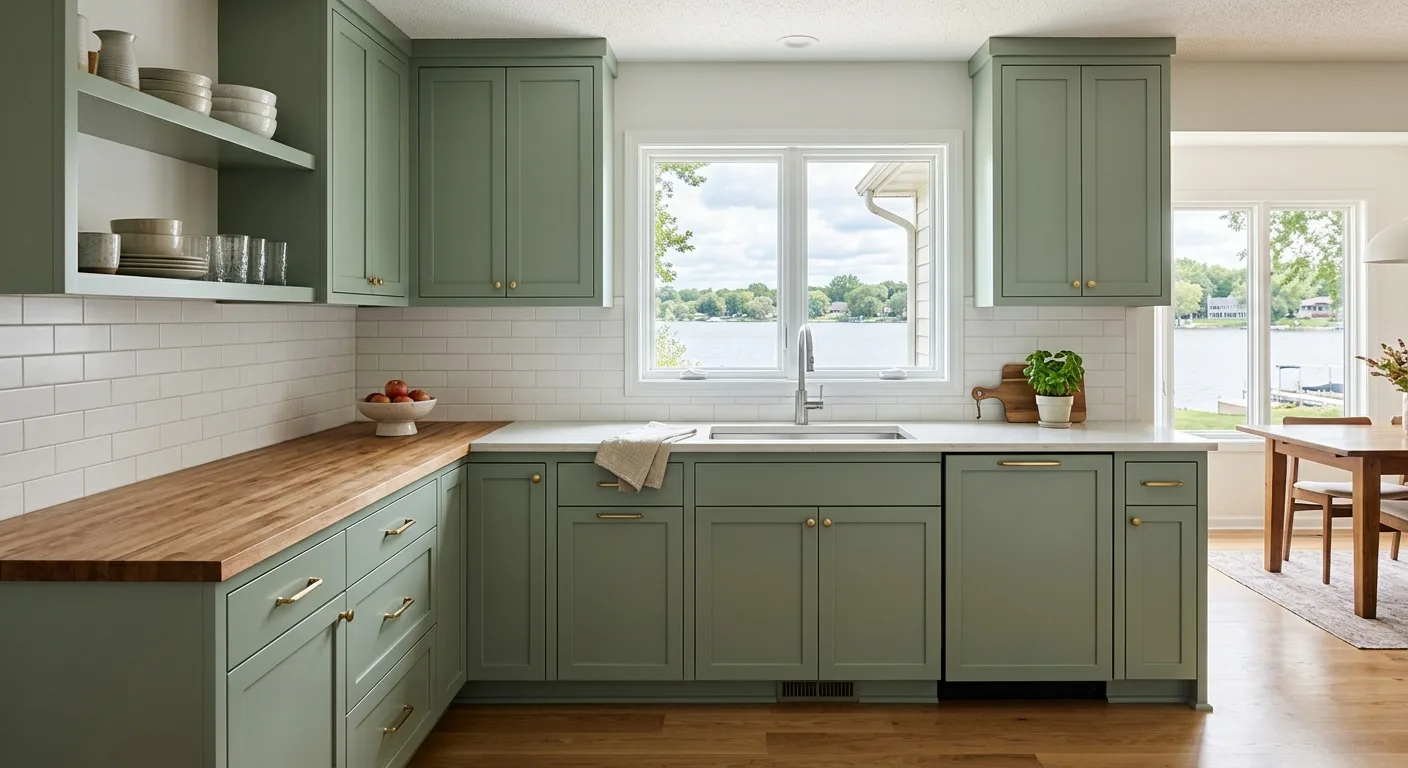
How We Combine Spray and Brush on One Kitchen
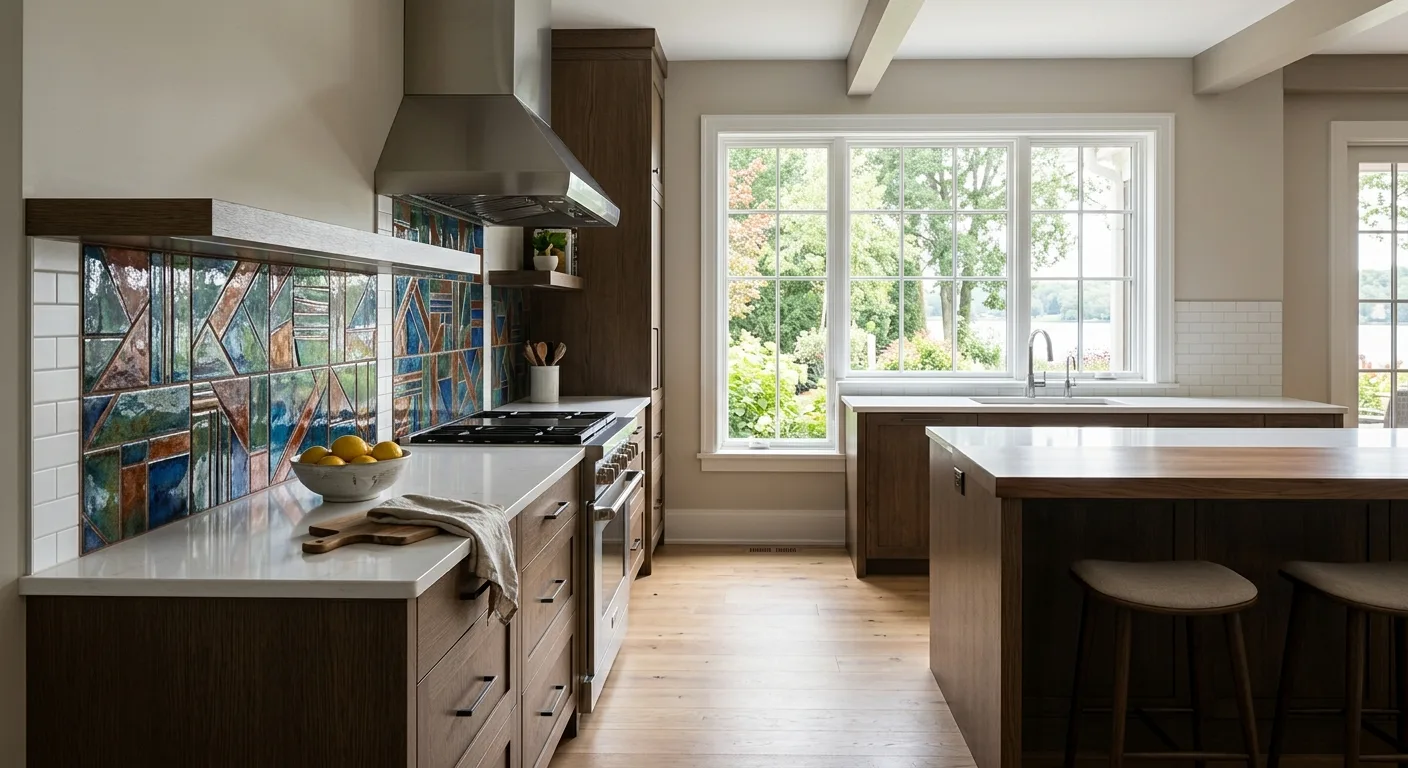
"Cabinet Painting Without Sanding" and the Products That Promise It
You've probably seen the bonding primers and chalk-style paints marketed as cabinet painting without sanding. The honest answer: on a real kitchen, some form of surface prep is not optional, even with those products. Straight talk on the no-sand claim: those bonding primers still require a thorough degrease and a scuff or degloss of the slick factory coat. What they let you skip is sanding to bare wood, not the prep that makes paint stick.
Kitchen cabinets are the hardest interior surface to finish well because they're glossy, they collect cooking grease, and they get touched constantly. A no-sand shortcut that skips the degrease and the scuff looks fine on day one and starts lifting at the door edges, exactly where hands land, within a season. We use high-adhesion primers built for slick, previously-finished surfaces, and we still degloss first, because that's what keeps a refinish bonded for years instead of months. If a quote for cabinet refinishing skips any mention of deglossing or a bonding primer, get a second opinion. The prep is the job.
When Cabinet Refinishing Is the Wrong Call
Where a Cabinet Refinish Fits With the Rest of Your Kitchen
Have a project in mind?
Free, no-pressure quote — let's talk about what you need.
Recent Projects
Frequently Asked Questions
Still have questions?
Reach out — Mike is happy to walk through your project.
Areas We Serve
Want it done right?
Mike Webster has been painting homes around Prior Lake since 2000. Fully insured, with a real warranty.